
Olive oil is the ingredient this site uses most and the one that is easiest to get wrong, because the labelling is a mixture of legal definitions, meaningless flourishes, and outright noise.
You do not need to become an expert. You need to know which four things on the bottle are load-bearing.
1. A harvest date, not a best-before
This is the single most useful thing on a label, and most bottles do not have one. Olive oil is a fruit juice and it degrades from the day it is pressed — its polyphenols and aromatics fall off steadily, and by eighteen months a good oil tastes like a mediocre one.
A best-before date tells you when the producer estimates it will be unpleasant. A harvest date tells you how old it actually is. Look for one within the last year, and treat its absence as a mild warning sign.
2. Dark glass or a tin
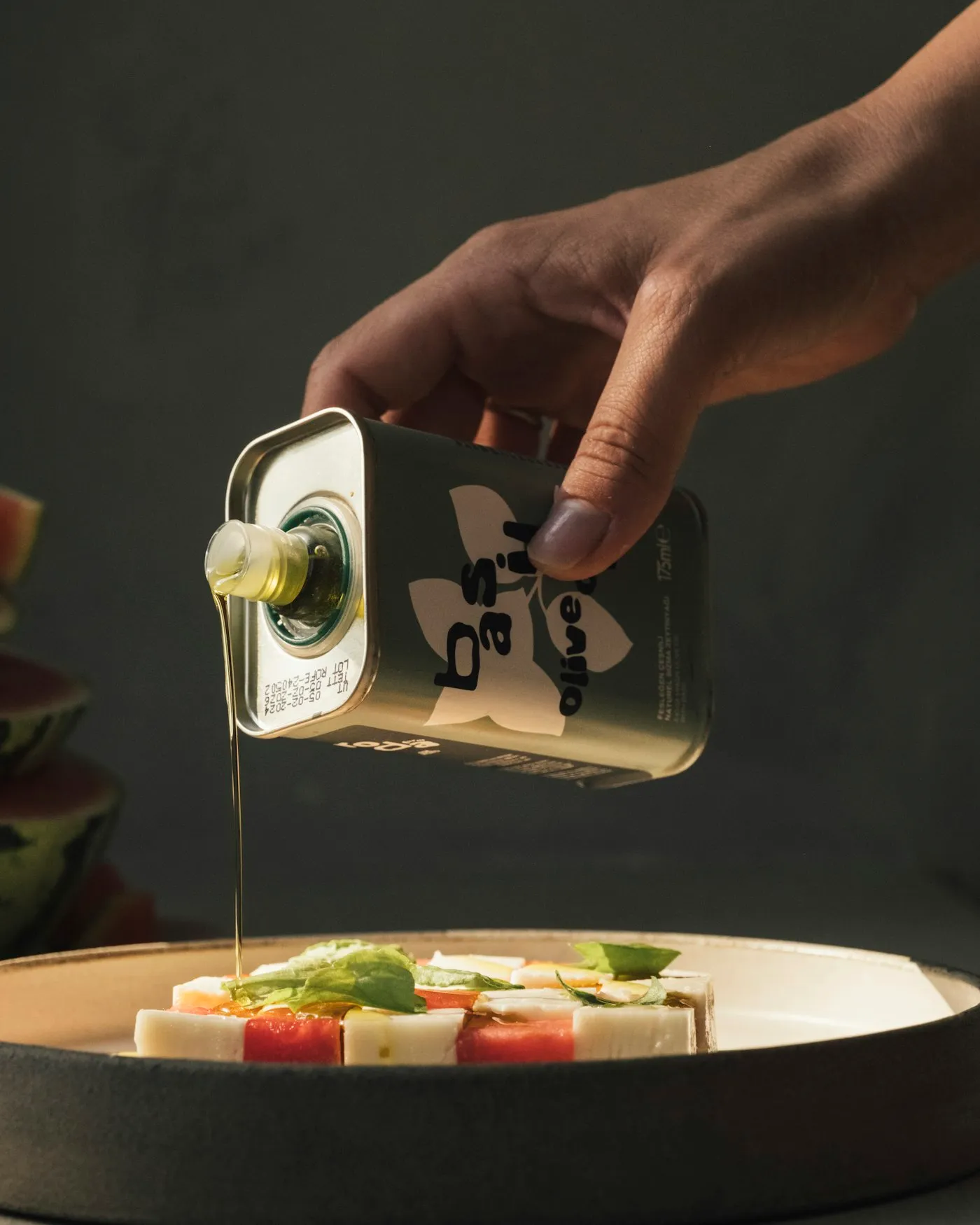
Light degrades olive oil faster than anything except heat. Clear glass on a lit supermarket shelf is a bottle that has been slowly ruined in front of you. Dark green glass or a metal tin means somebody in the supply chain was paying attention.
Which also means: decant nothing into a clear cruet by the hob. That is the worst place in the kitchen for it.
3. One country of origin, ideally one region
“Packed in Italy” is not an origin. Neither is “a blend of EU and non-EU olive oils”, which appears on a great deal of what is sold as Italian and means the contents could be from four countries. It is not necessarily bad oil, but nobody is standing behind it.
A single country is better. A named region, estate, or cultivar is better still, because at that point somebody’s name is on it.
4. “Extra virgin” and nothing else
Extra virgin is a legal grade with defined chemistry — free acidity below 0.8%, no refining, no heat, no solvents. It is the only grade worth buying for anything, including cooking.
Everything after those words is decoration. “Cold pressed” is redundant: extra virgin is by definition mechanically extracted at low temperature. “First press” is meaningless with modern centrifuges — there is only one press. “Pure”, “light”, and “extra light” all denote refined oil, which is a lower grade despite sounding like an upgrade.
What the taste should do
Open a good bottle and it should smell green — cut grass, tomato leaf, artichoke, sometimes banana or almond. Taste a spoonful and there should be bitterness in the middle of your tongue and a peppery catch at the back of your throat, sometimes enough to make you cough.
That pepper is oleocanthal, and it is a direct signal of polyphenol content. It fades with age. An oil with no bitterness and no catch is either old, refined, or from olives picked very ripe — and it will contribute nothing to a dish beyond fat.
Two bottles, not one
The practical conclusion is to stop looking for one oil that does everything. Buy a large tin of decent, inexpensive extra virgin for the pan, where heat will drive off the delicate aromatics regardless of what you paid. And buy one good bottle, with a harvest date on it, for finishing — over beans, over bread, over a tomato salad, where you will actually taste it.
The good bottle should feel slightly extravagant and it should be finished within three months. A bottle of expensive oil kept for special occasions is a bottle of expensive oil going stale.