At a glance
About 2 litres — dinner twice, or once with leftovers frozen
ProjectA whole afternoon, and worth clearing it.
- Prep
- 25 min
- Cook
- 3 hr 15 min
- Total
- 3 hr 40 min
- Serves
- 8
Almost every long-cooked meat sauce tastes better the next day, and the usual explanation — that the flavours “meld” — is doing a lot of work without saying anything. What actually happens is more interesting and it changes how you cook it.
Overnight in the fridge, the fat that separated during the long simmer solidifies on the surface. When you reheat it gently and stir, that fat re-disperses into the liquid as much finer droplets than it managed the first time, and finely dispersed fat reads on the palate as body and roundness. It is an emulsion that has had twelve hours to sort itself out.
Three additions, in this order
The order is not tradition for its own sake. Tomato paste goes in early and gets fried, which drives off its raw metallic edge and deepens it. Milk goes in next, while the meat is still relatively firm, so the lactose has hours to brown and the proteins have hours to work on the mince. Wine follows to deglaze and lift. Tomatoes come last, because acid tightens protein and putting them in early gives you meat that never fully softens.
Reverse any two of those and you will still eat well, but you will taste the difference.
Why the soffritto takes twenty minutes
Onion, carrot, and celery cooked for five minutes taste of onion, carrot, and celery. Cooked for twenty over a low heat, with salt drawing the water out, they collapse into something sweet and unidentifiable that reads as depth rather than as vegetables. This is the free flavour in the recipe and it costs nothing but patience.
Browning in batches
A kilo of mince dropped into a pan at once drops the temperature below 100C and the meat simply poaches in its own juice. Grey mince cannot be fixed later. Two or three batches, each left undisturbed for a minute before breaking up, gets you the crust that the entire sauce is built on.
The pasta is not an afterthought
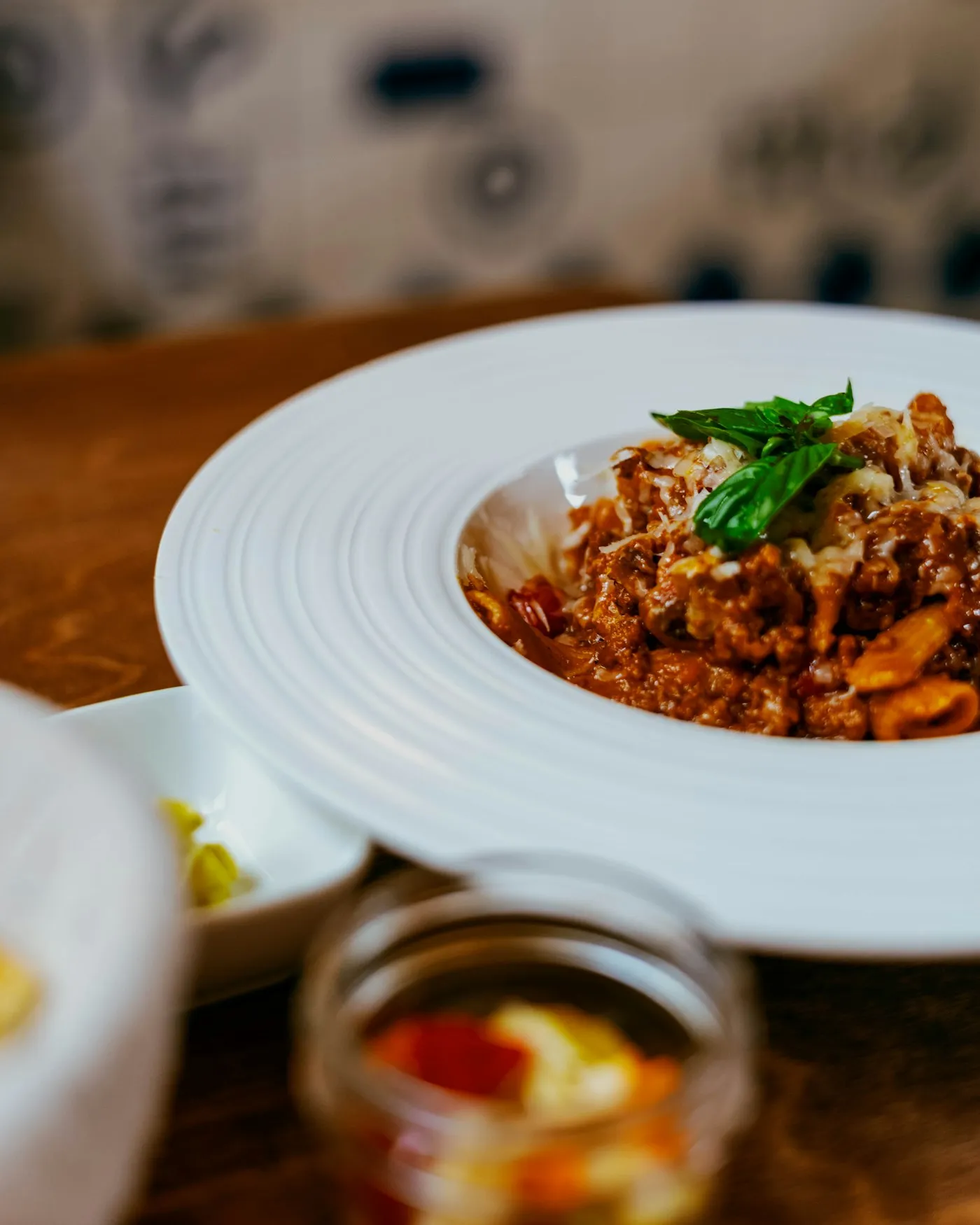
Tagliatelle or rigatoni, cooked two minutes short, finished in the sauce with a ladle of the water. A ragù served on pasta rather than tossed through it is a different and worse dish, and it takes the same amount of time.
Ingredients
For the base
For the sauce
Method
6 steps
Render the pancetta first
Warm the oil and pancetta together over a medium heat until the fat runs and the pieces start to colour. That fat is the cooking medium for everything after it.
The soffritto is not a five-minute job
Add the onion, carrot, celery, and a good pinch of salt, and cook for twenty minutes over a low heat, stirring now and then, until everything has collapsed and gone sweet. Garlic in the last two minutes.
Brown the meat in batches
Turn the heat up, add the mince in two or three lots, and let each one sit and colour before you break it up. All of it at once will boil in its own liquid and you lose the crust entirely.
Milk before wine, wine before tomato
Stir in the tomato paste and cook it for two minutes until it darkens. Pour in the milk and simmer until it has almost gone, then the wine, and reduce that by half. Only then add the tomatoes, the rind, and the bay.
Three hours, barely moving
Crush the tomatoes, bring it to the gentlest possible simmer, half-cover the pan, and leave it for three hours. Stir every forty minutes. It is done when the fat has separated out and sits orange on the surface.
Cool it, then wait a day
Season it properly, cool it uncovered, and refrigerate overnight. Reheat gently, stirring the risen fat back in, and finish the pasta in it with a ladle of the cooking water.
Cook's notes
- The milk step is the one people skip and it is the one that matters most. Lactose browns and milk proteins tenderise the meat; without it the sauce is sharper and grainier.
- Lean mince makes a dry ragù. Twenty per cent fat is not a luxury here, it is the emulsifier.
- Freeze it in portions flat in bags. It keeps three months and loses nothing.
- You will need
- A heavy casserole with a lid
- Keeps
- Five days in the fridge, three months in the freezer. Better on day two than day one, every time.