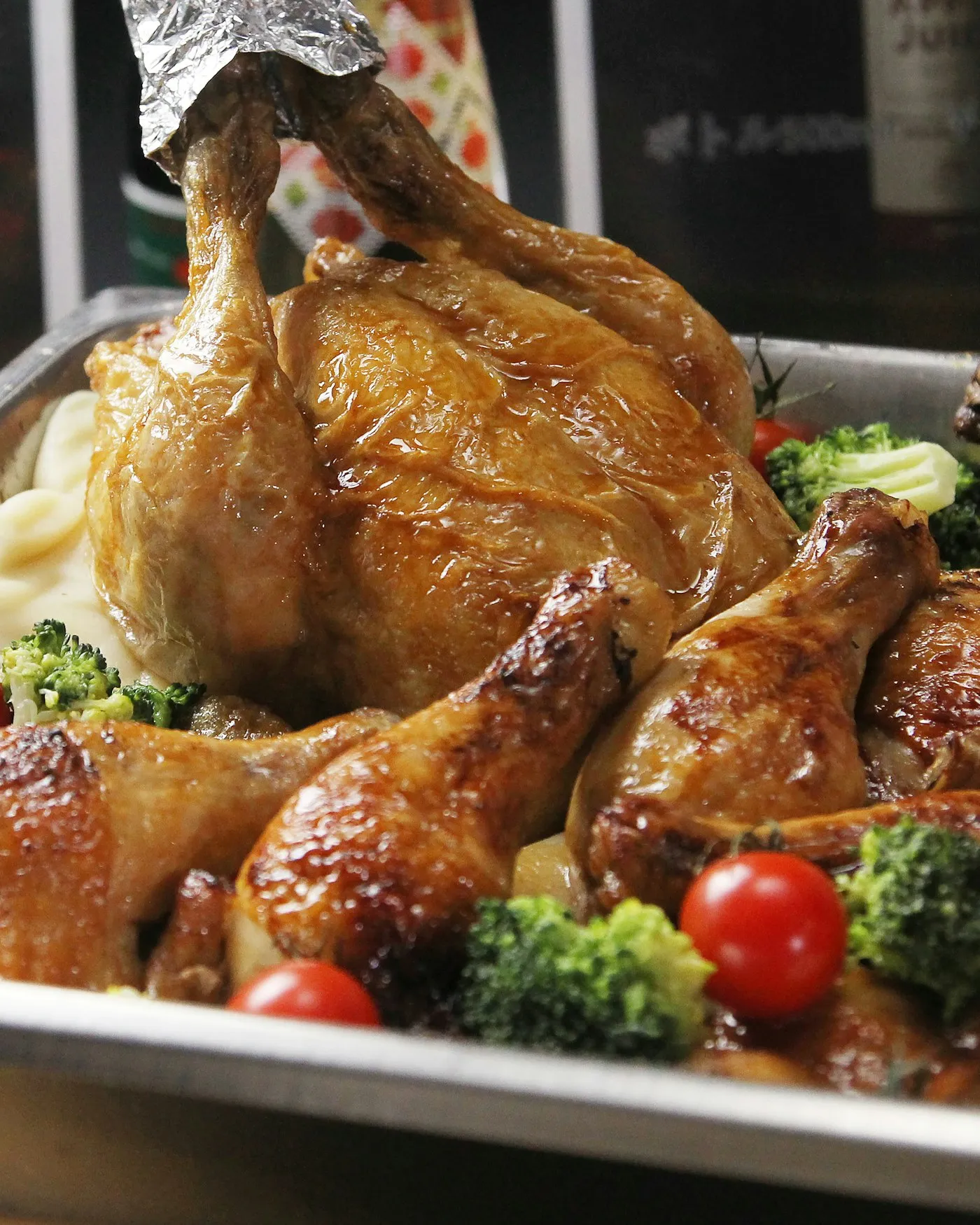
At a glance
One 1.8kg bird, four servings and a carcass for stock
MediumA few moving parts, or something that needs watching.
- Prep
- 20 min
- Cook
- 1 hr 15 min
- Total
- 1 hr 35 min
- Serves
- 4
Plus restingOvernight uncovered in the fridge, salted. Then 20 minutes resting after the oven.
A roast chicken has one difficult requirement — skin that shatters over meat that is still juicy — and two things that are usually blamed for missing it: the oven and the bird. Neither is normally the problem. The problem is water.
Chicken skin cannot crisp while it is losing moisture, because evaporation holds the surface at around 100C and browning needs considerably more than that. So the useful work happens the night before, in the fridge, with salt.
Dry brining, in one paragraph
Salt on the surface draws water out of the skin by osmosis, then dissolves into it and is drawn back into the flesh, carrying seasoning with it. Overnight, uncovered, the fridge’s dry air takes the surface moisture away for good. What you have in the morning is a bird seasoned to the bone with skin like parchment, and it will brown in half the time a wet one would.
One per cent of the bird’s weight is the number. For a 1.8kg chicken that is 18g, or about two level teaspoons of fine salt.
Tearing the potatoes
Parboil, drain, steam dry, then tear. A torn potato has a rough, fractured surface with far more area than a cut one, and every one of those ragged edges is somewhere fat can collect and fry. Under a chicken, that fat is rendered chicken fat, and the result is closer to a roast potato than anything a separate tray achieves.
Floury varieties — Maris Piper, russet, King Edward — tear well. Waxy ones resist and stay smooth.
The two temperatures
Twenty minutes at 220C sets and starts the skin while the inside is still cold. Dropping to 190C for the rest means the breast comes up to temperature gently instead of tightening. It is a small thing and it is the difference between good and slightly dry.
No gravy
There is a tin with rendered fat, chicken juices, collapsed garlic, and a roasted lemon in it. Squeezing the lemon and scraping the tin gives you something better than a flour-thickened gravy would, in ninety seconds, and it tastes of the bird rather than of stock.
Ingredients
For the bird
For underneath
Method
5 steps
Salt it the night before
Pat the chicken dry, rub the salt and pepper all over it and inside the cavity, and leave it uncovered on a plate in the fridge overnight. The skin should feel dry and papery in the morning.
Parboil, then tear
Boil the potatoes in salted water for ten minutes, drain, and let them steam dry for five. Then tear them into rough chunks with your hands or two forks. Torn edges catch fat; knife edges do not.
Build the tin
Heat the oven to 220C. Toss the potatoes with the oil and thyme in the tin, push them to the edges, and sit the chicken in the middle with the lemon and garlic halves in the cavity.
Hot, then moderate
Twenty minutes at 220C to set the skin, then down to 190C for another fifty to fifty-five. The thigh should read 75C and the potatoes should be dark at the tips.
Rest properly, and use the tin
Lift the bird onto a board and leave it twenty minutes. Squeeze the roasted lemon over the potatoes, scrape the tin, and pour any juice from the resting board back in. That is the sauce; there is no gravy to make.
Cook's notes
- One per cent salt by weight, applied the night before, seasons the meat all the way through and dries the skin. It is the single largest improvement available to a roast chicken.
- Uncovered in the fridge. Cling film traps the moisture you are trying to lose.
- Twenty minutes of resting is not optional. Carved straight from the oven, a quarter of the juice ends up on the board.
- You will need
- A roasting tin the bird fits in with room around it
- Keeps
- Three days. The carcass makes two litres of stock and should not go in the bin.