At a glance
One 23 x 33 cm tray
MediumA few moving parts, or something that needs watching.
- Prep
- 25 min
- Cook
- 25 min
- Total
- 50 min
- Serves
- 8
Plus restingTwelve to eighteen hours in the fridge, then two hours in the pan.
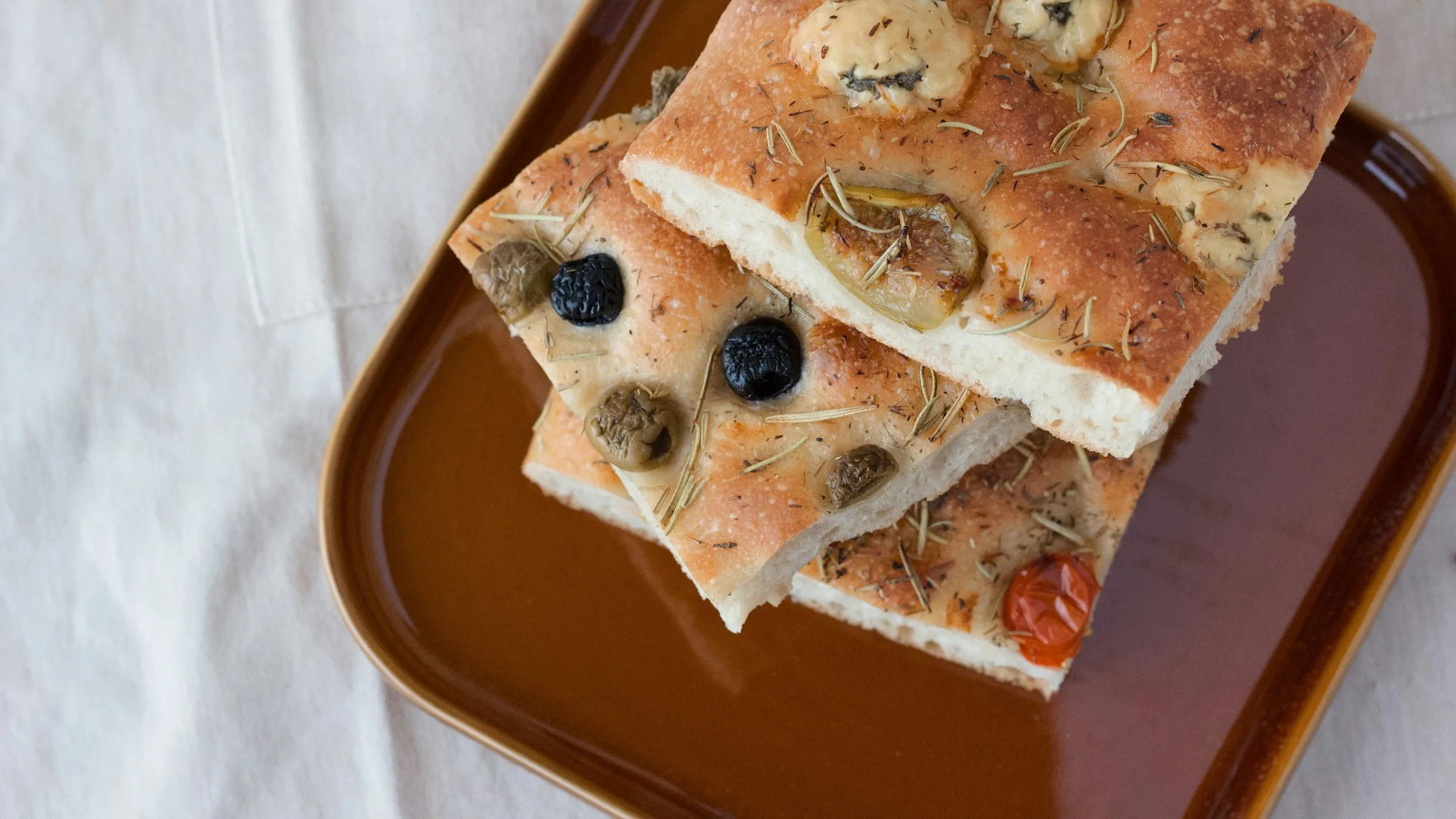
Focaccia is the most forgiving bread there is, and it is still the one people most often get wrong — because the two things that make it work both feel like mistakes while you are doing them.
The first is the water. At eighty per cent hydration this dough does not form a ball and cannot be kneaded. It is stirred, folded a few times, and then left in the fridge overnight, where time does the work that hands would otherwise have to.
The second is the oil. Four tablespoons in the tray is not a mistake and it is not a typo. It is a shallow fry, and it is the difference between a crisp, lacquered base and a flatbread.
What the overnight rise buys you
Cold fermentation slows the yeast down and lets enzymes get on with breaking starch into sugar. That sugar is what browns, and it is where the faintly sweet, almost nutty note in good focaccia comes from. A dough proved warm in three hours rises just as well and tastes of very little.
Eighteen hours is the outside edge. Past that the gluten starts giving up and the crumb goes gummy.
Dimpling, and why it has to be firm
Press with the pads of your fingers, straight down, until you feel the tray. Timid dimples close up in the oven and you get a dome. Real dimples hold oil, and the oil in them is what fries those pockets darker than the rest of the top.
Anything you push into those wells should be able to take twenty-five minutes at 230C. Halved tomatoes can. Sliced tomatoes cannot, and neither can garlic.
Eating it
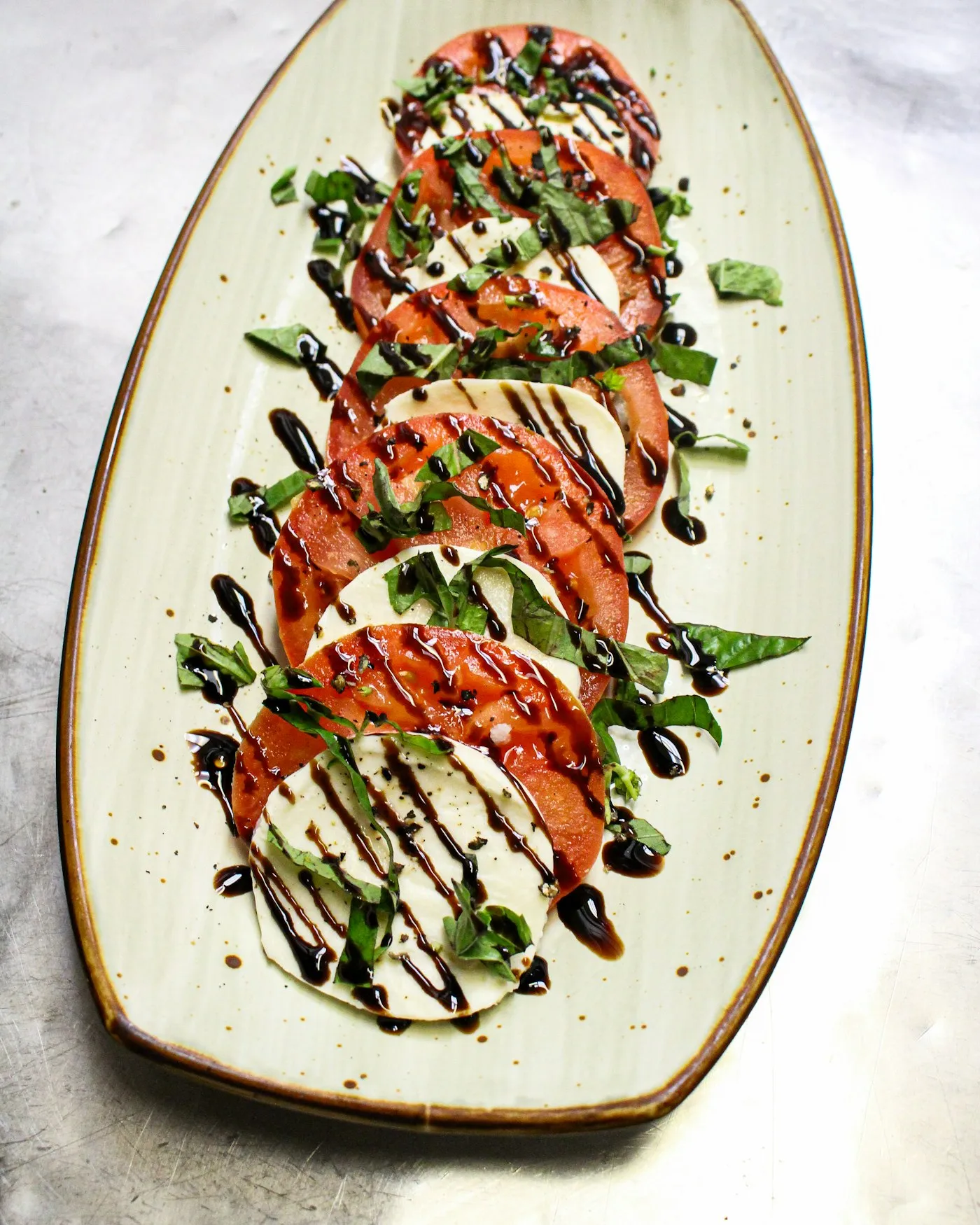
Warm, torn, on its own. Or under the tomato salad, where it does the job bread was invented for.
Ingredients
For the dough
For the pan and the top
Method
5 steps
Mix, do not knead
Stir the flour, water, salt, yeast, and 2 tablespoons of oil together with a spoon until there is no dry flour left. It will be a sticky, shaggy mess and that is correct. Cover the bowl.
Fold four times, then leave it
Over the next hour, wet one hand and fold the dough over onto itself four times, twenty minutes apart. Then cover it and put it in the fridge for twelve to eighteen hours.
Oil the pan hard
Pour 4 tablespoons of oil into the tray and tip it so the sides are coated too. Scrape the cold dough in, turn it over once in the oil, and leave it alone for two hours at room temperature.
Dimple and dress
Heat the oven to 230C. Oil your fingertips and press straight down through the dough to the base of the tray, all over. Push the tomato halves into the dimples, scatter the rosemary, and finish with the last spoon of oil and plenty of flaky salt.
Bake until the base sings
Twenty to twenty-five minutes, until the top is deep gold and the underside is crisp enough to click against the tray. Lift it out onto a rack immediately or the bottom steams itself soft.
Cook's notes
- The fridge rise is doing the flavour work. Eight hours makes bread; sixteen makes focaccia that tastes of something.
- If the dough tears rather than dimples, it is too cold. Give it another half hour on the counter and try again.
- A glass dish will not crisp the base. Use metal.
- You will need
- A 23 x 33 cm metal baking tray · Digital scale
- Keeps
- Two days, cut side down on a board. Revive slices in a dry pan, never a microwave.