At a glance
One 20 cm round cake
EasyOne pan, no technique to learn first.
- Prep
- 20 min
- Cook
- 50 min
- Total
- 1 hr 10 min
- Serves
- 10
Butter cakes are a performance. There is a temperature the butter has to be at, a stage the creaming has to reach, and a window in which the eggs will go in without splitting. Olive oil cake asks for none of that. The fat is already liquid, so the batter comes together in one bowl with a whisk and cannot really be broken.
What you get in exchange is a cake with a much longer life. Oil stays soft at room temperature where butter sets hard, which is why this is still good on Thursday when a sponge made on Monday is a coaster.
Choosing the oil
This is the whole decision. The oil is not a shortening here, it is the dominant flavour, and it will be more obvious in the finished cake than it is in the bottle. A grassy, peppery Tuscan oil makes a cake with a savoury edge that I like very much. A softer, rounder Spanish or Greek oil makes a gentler one.
What you cannot do is use something anonymous and hope the sugar covers it. It does not.
The two minutes of whisking
Sugar and eggs, whisked until they visibly thicken and lighten. This is the only aeration the cake gets — there is no creamed butter holding air — and skipping it gives you something dense and slightly greasy. Two minutes by hand is enough, and it is worth setting a timer, because it is longer than it feels.
Citrus, and where to put it
Zest goes in the batter, where the oils in it dissolve into the fat and reach every crumb. Juice goes in too, but only one orange’s worth: more and the acid starts fighting the baking powder.
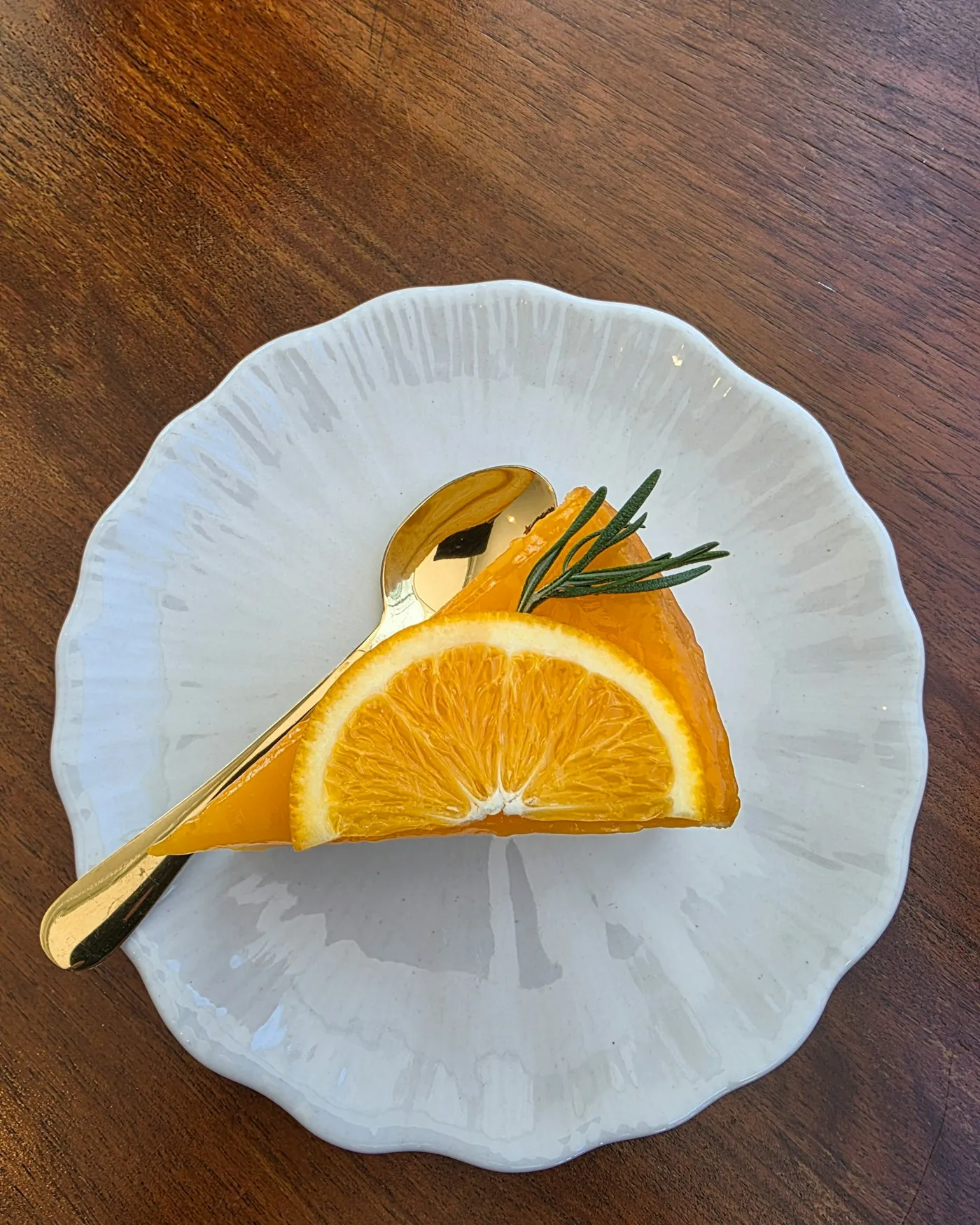
The slices on top are not decoration so much as insurance. They keep the surface from drying while the middle finishes, and the demerara over them turns to a thin, cracking caramel.
Serving it
Plain, with coffee, standing up in the kitchen. Or with a spoonful of thick yogurt and nothing else. If you want something to drink beside it in the evening, it is very good with a small glass of something bitter.
Ingredients
For the cake
To finish
Method
4 steps
Whisk the wet
Heat the oven to 175C and line the tin. Whisk the sugar and eggs together for a full two minutes, until pale and thickened, then pour in the oil in a steady stream, whisking as you go. Add the milk, zest, and juice.
Fold the dry in once
Sift the flour, almonds, baking powder, and salt over the top and fold until just combined. A few streaks of flour are better than a smooth, overworked batter.
Top and bake
Pour into the tin, lay the orange rounds over the surface, and scatter the demerara. Bake for 45 to 55 minutes, until a skewer comes out with a crumb or two on it and the top is deeply bronzed.
Cool all the way down
Ten minutes in the tin, then out onto a rack. Warm olive oil cake tastes of oil; cooled, it tastes of citrus and almond. Wait.
Cook's notes
- The oil is the flavour, so use one you would put on a salad. A supermarket blend makes a cake that tastes faintly of nothing.
- Blood oranges are a season, not a rule. Ordinary oranges, mandarins, or two lemons all work; adjust the sugar down slightly for lemon.
- Day two is better than day one. Day three is better than day two.
- You will need
- A 20 cm springform tin · Digital scale
- Keeps
- Four days under a cloth at room temperature. Do not refrigerate it — the oil firms and the crumb goes waxy.