At a glance
One tray, for four with yogurt or ice cream
EasyOne pan, no technique to learn first.
- Prep
- 8 min
- Cook
- 25 min
- Total
- 33 min
- Serves
- 4
Stone fruit sold in the north is picked hard so it survives the journey, and a good proportion of it never gets sweet — it goes from hard to mealy without passing through ripe. That fruit is not a loss, it is just a different recipe.
Heat as a substitute for sun
Ripening on the tree converts starch to sugar and breaks pectin down, which is why a ripe peach is both sweet and soft. Twenty-five minutes at 200C does an approximation of both: water evaporates so the sugar that is there concentrates, and pectin degrades so the flesh collapses.
It will not turn a bad plum into a good one. It will turn a bad plum into a good pudding, which is a better outcome than the fruit bowl was going to manage.
A snug dish
This matters more than it sounds. Fruit spread out in a large tray gives up its juice into a thin layer that evaporates and then burns, and you get dry fruit and a black dish. Packed tightly, the same juice pools deep enough to stay liquid and reduces into a syrup.
Water in the base
Two tablespoons, and this is the one measurement in the recipe that does not scale. Honey on its own in a hot oven will be caramelising before the fruit has released anything, and caramelised honey is bitter. The water buys the fruit five minutes to start giving up liquid of its own.
Thyme, not cinnamon
Cinnamon, star anise, and vanilla all work and all make it taste like a dessert. Thyme keeps it ambiguous — it is just as good spooned over yogurt at breakfast, or alongside cheese, or next to something roasted. Savoury herbs with sweet fruit is one of the most reliable moves there is.
Ingredients
Method
4 steps
Cut side up, tightly packed
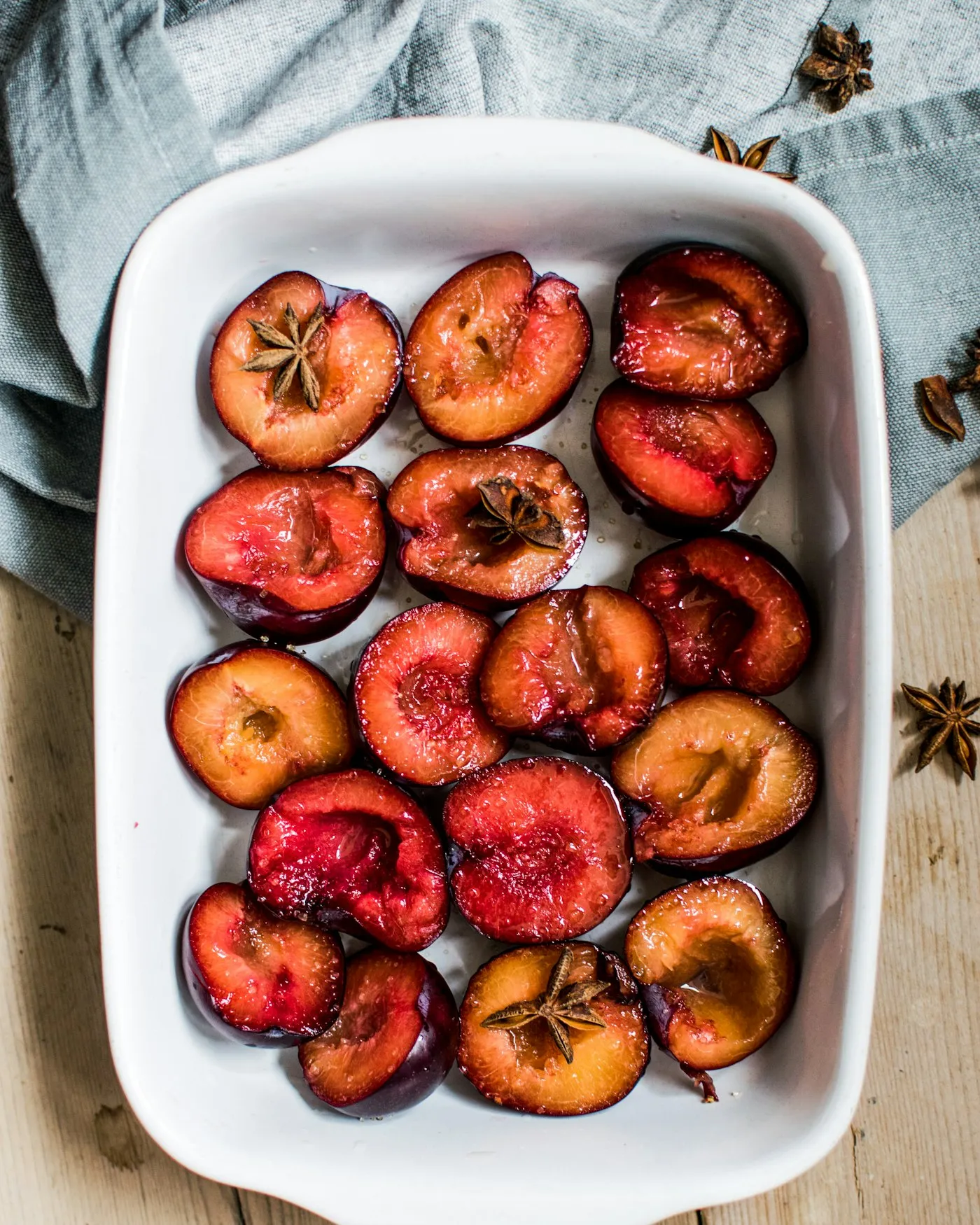
Heat the oven to 200C. Sit the halves cut-side up in a dish they just fit into. A large dish lets the juices spread thin and burn; a snug one keeps them as syrup.
Honey, oil, aromatics
Spoon the honey over the cut faces, add the oil, tuck the thyme and lemon peel between the fruit, and pour the water into the base of the dish. Salt lightly.
Roast without turning
Twenty-five minutes, until the fruit has slumped, the edges have caught, and there is a thick pink syrup in the dish. Underripe fruit may want five minutes more.
Serve warm, not hot
Let it settle for ten minutes so the syrup thickens further, then spoon it over cold yogurt or ice cream with the syrup and the softened thyme.
Cook's notes
- This is the fix for hard, flavourless supermarket stone fruit. Heat does what the sun did not: it concentrates the sugar and breaks down the pectin.
- The two tablespoons of water are not scaled when you scale the recipe — they exist to stop the honey scorching before the fruit releases its own juice, and that is a property of the dish, not the quantity.
- Thyme rather than the obvious cinnamon. It is savoury and resinous and keeps the dish from tasting like a crumble filling.
- Keeps
- Three days in the fridge in its syrup. Cold, on yogurt, for breakfast.