At a glance
About 1.2kg cooked chickpeas plus a litre of broth
EasyOne pan, no technique to learn first.
- Prep
- 10 min
- Cook
- 1 hr 45 min
- Total
- 1 hr 55 min
- Serves
- 6
Plus restingTwelve hours soaking in salted water, or overnight.
There is nothing wrong with a tin of chickpeas — the bean stew is built on tins and it is a good dish. But a chickpea cooked from dried in an aromatic, oily broth is not the same ingredient. It is creamier, it holds its shape while being soft all the way through, and it tastes of something.
The reason to make a whole pot is that the effort does not scale. Five hundred grams takes exactly as much of your attention as one tin, and it feeds you for a week.
Salt in the soaking water
For years the received wisdom was that salt toughens the skins. It is the opposite. Sodium ions displace the calcium and magnesium that hold pectin in the cell walls rigid, so salted-soaked pulses cook faster and more evenly, with skins that soften at the same rate as the interior rather than bursting first.
A tablespoon in two litres is enough. Rinse before cooking, since the soaking water carries away some of the compounds that make legumes hard work.
The ten-minute hard boil
A short violent boil at the start pushes foam and scum to the surface, where you can skim it, and gets the pot to temperature quickly. After that, hard boiling only breaks the chickpeas up. Everything else happens at a simmer so lazy you have to look closely to see it.
Cooked means cooked
A chickpea that is soft on the outside and faintly chalky in the middle will ruin whatever it goes into and cannot be corrected by more cooking once it has cooled. Test three from different depths, and when in doubt give it another fifteen minutes. Over-cooked chickpeas make excellent hummus; under-cooked ones make nothing.
What to do with them
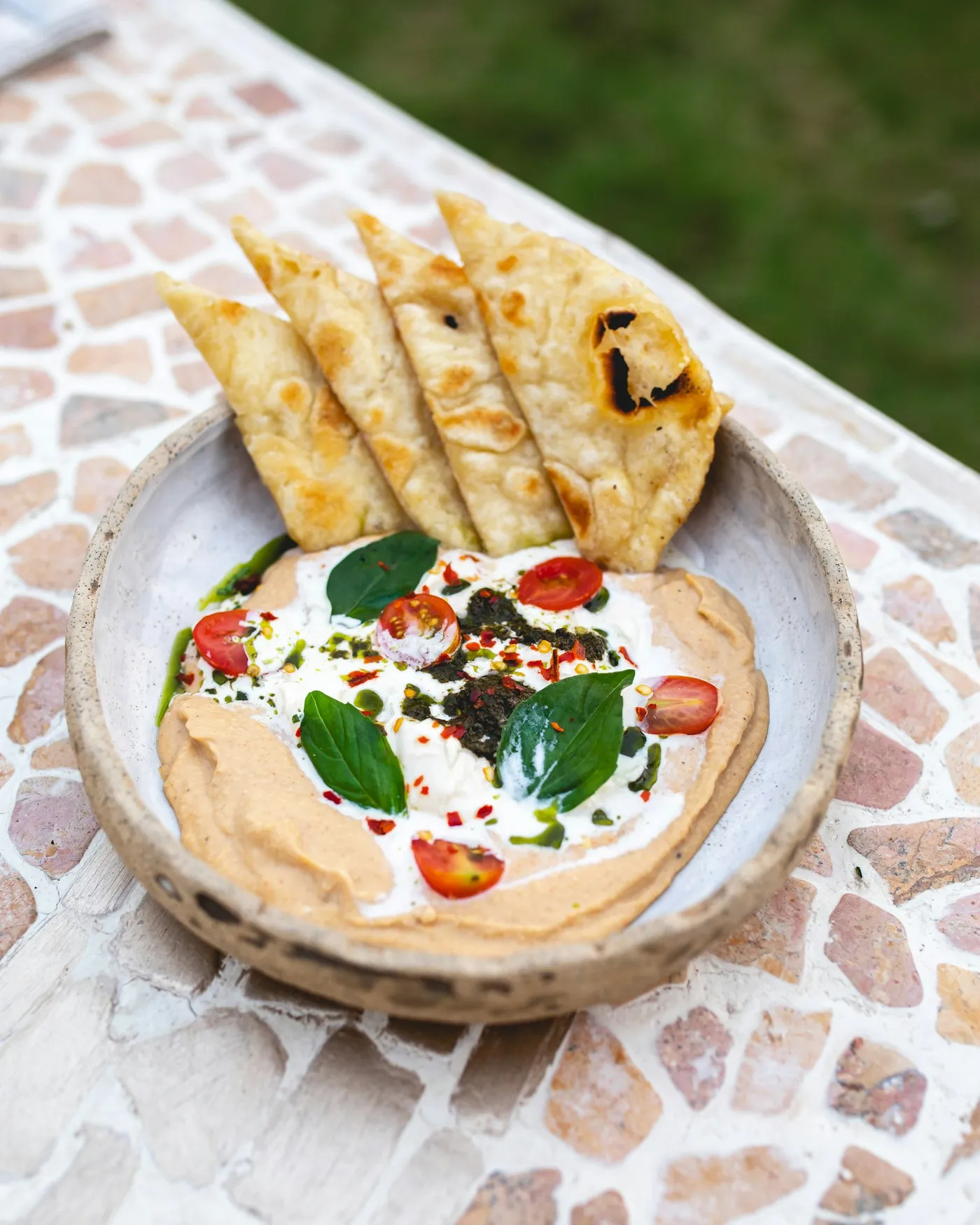
Warm, in a bowl of their own broth with olive oil and pepper, is dinner. Drained and roasted hard, they are a snack. Blitzed with tahini and lemon they are the best hummus you will make, and they go straight under the whipped feta on a table before dinner.
Ingredients
For the soak
For the pot
Method
5 steps
Soak in salted water
Cover the chickpeas with the water, stir in the tablespoon of salt, and leave them twelve hours. Salted soaking water gives you skins that stay intact and interiors that cook evenly — plain water does neither as well.
Fresh water, everything in at once
Drain, rinse, and put the chickpeas in a pot with the onion, garlic, bay, lemon peel, oil, salt, and enough cold water to cover by four centimetres.
One hard boil, then leave it alone
Bring it to a rolling boil for ten minutes, skimming any foam, then drop it to the barest simmer and half-cover. Ninety minutes to two hours, depending on how old the chickpeas are.
Test three, not one
Take three chickpeas from different parts of the pot. All three should be completely creamy in the middle with no chalk at all. If one is, keep going — undercooked chickpeas are the most common failure and there is no rescuing them later.
Season the broth, then cool in it
Fish out the onion and bay, squeeze the soft garlic back in, and salt the liquid until the broth tastes good on its own. Let them cool in it. That broth is the second thing this recipe makes.
Cook's notes
- Dried chickpeas do not last forever. Ones that have been in the cupboard for three years will never soften properly, however long you boil them.
- The broth is not a by-product. It is a light, nutty stock that is better than most vegetable stock cubes will ever be.
- Freeze them in their liquid, in portions. Never drain them for storage; the skins dry and split.
- You will need
- A large heavy pot with a lid
- Keeps
- Five days in the fridge in their broth, three months frozen.