

At a glance
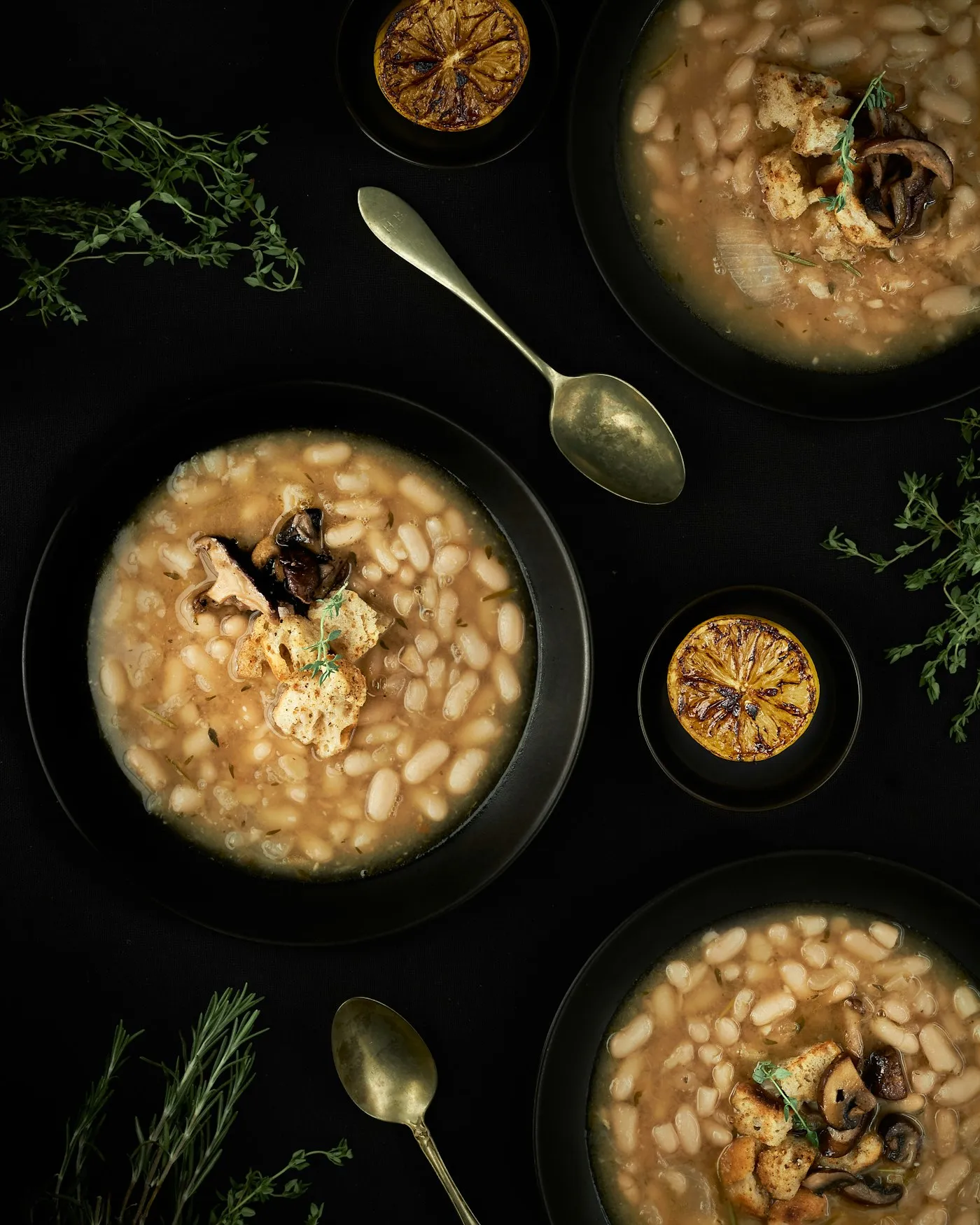
4 bowls, with bread
EasyOne pan, no technique to learn first.
- Prep
- 10 min
- Cook
- 20 min
- Total
- 30 min
- Serves
- 4
Tinned beans have a reputation problem: they are what you eat when you have not shopped. But a tin of beans plus four tablespoons of olive oil and a whole lemon is not a compromise, it is a Mediterranean dish that happens to take twenty minutes.
The thing that makes it work is the same thing that makes most bean dishes work — texture contrast between whole beans and crushed ones — and the thing that makes it taste like food rather than like a tin is finishing with acid and raw oil off the heat.
Crushing a third
Beans suspended in stock are a soup. Beans suspended in their own starch are a stew, and the difference is a spoon pressed against the side of the pan for thirty seconds. About a third is right: enough to thicken, not so much that everything turns to purée.
This is also why the tin liquid stays. Rinsing beans washes away exactly the starch you are trying to recruit.
Lemon off the heat
Citric acid is volatile and heat-sensitive. Squeeze lemon into a simmering pan and by the time it reaches the table it tastes generically sour rather than specifically of lemon. Off the heat, thirty seconds before serving, it stays sharp and floral.
Dill has the same problem, worse. It should barely be warm.
Fat as seasoning
Four tablespoons in the pan, then more raw over the top. The cooked oil carries the fennel and garlic through the dish; the raw oil sits on the surface and hits first. If you have a peppery oil, this is the dish to open it for — and if you are not sure what you have, that is a longer conversation.
What goes with it
Bread, and something bitter and green. It is also very good under a fried egg the next morning.
Ingredients
Method
4 steps
Soften the leek properly
Warm the oil in a wide pan and cook the leek with a good pinch of salt over a low heat for eight minutes, until completely soft and not at all coloured. Add the garlic and fennel seeds for the last minute.
Crush a third of the beans
Add the beans and stock, then mash about a third of them against the side of the pan. That starch is what turns a bowl of beans in liquid into a stew.
Simmer, then finish off the heat
Ten minutes at a lazy simmer, until the liquid has thickened enough to coat a spoon. Take it off the heat before the lemon and dill go in, or both go dull.
Lemon last, and generously
Zest, juice, all the dill, plenty of pepper, and another slug of raw olive oil over the top. Taste it and add more salt than you think — beans absorb a surprising amount.
Cook's notes
- Do not rinse the beans. The starchy liquid in the tin is the thickener you would otherwise have to build.
- Butter beans give a creamier stew, cannellini a firmer one. Both are correct.
- Adding the lemon while the pan is still on the heat cooks the brightness out of it. Off the heat, always.
- Keeps
- Four days, and it thickens in the fridge. Loosen with water and add fresh lemon before serving again.