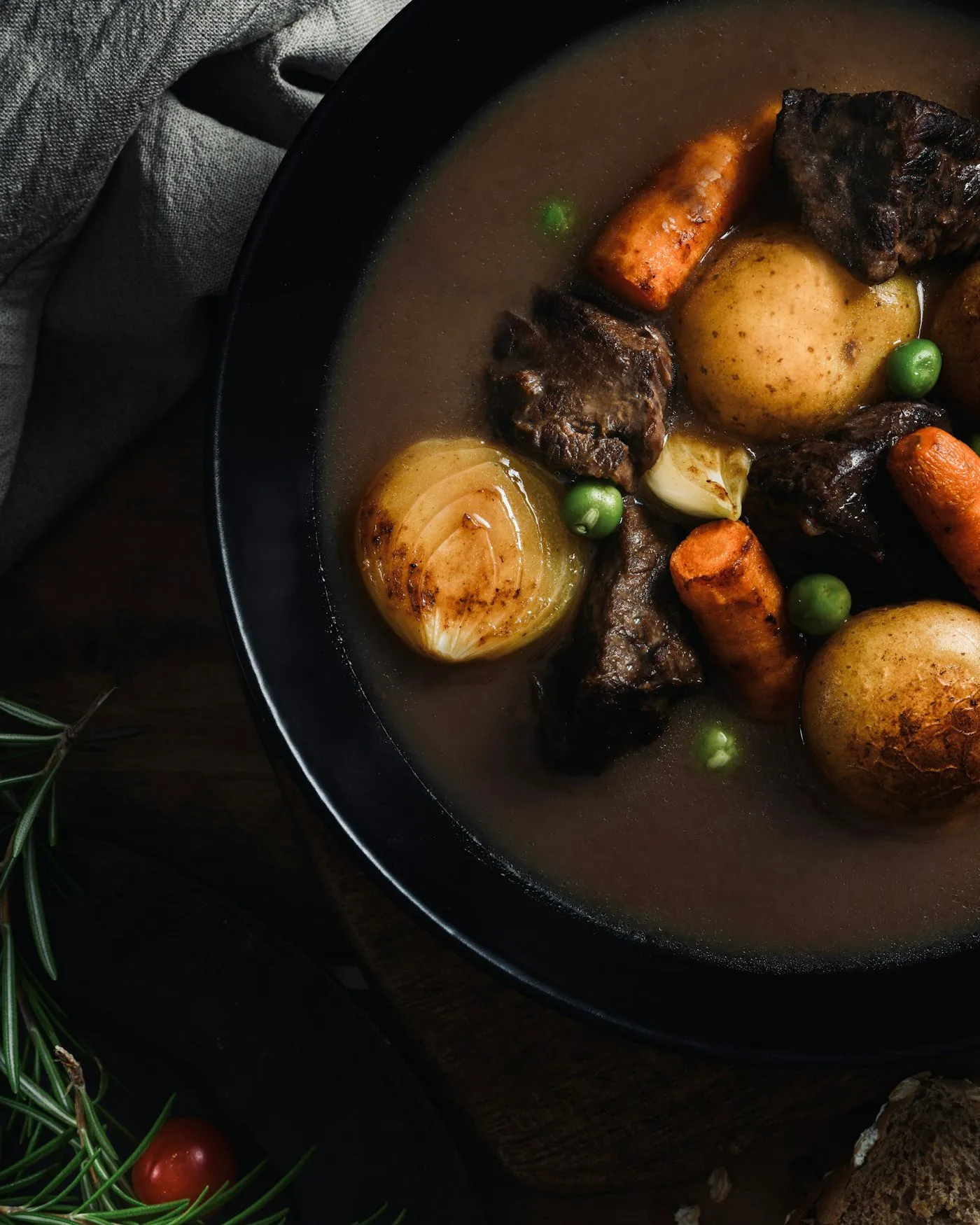
At a glance
4 large servings
ProjectA whole afternoon, and worth clearing it.
- Prep
- 30 min
- Cook
- 4 hr
- Total
- 4 hr 30 min
- Serves
- 4
Short ribs are what you buy when you want the effect of a rib of beef for a quarter of the money. They are almost entirely collagen and intramuscular fat, which makes them useless for anything fast and close to unfailable over four hours.
The whole recipe is two decisions: brown them harder than feels sensible, and do not drown them.
Browning is not a step to hurry
Eight to ten minutes a batch, in a pan hot enough to be slightly alarming. Every bit of dark crust is Maillard product, and Maillard product is where the sauce’s colour and about half its flavour live. A pale sear gives you a pale, one-note braise that no amount of stock will rescue.
The light dusting of flour is there for two reasons: it dries the surface further, so browning starts sooner, and it thickens the finished liquid enough that you will not need to do anything about it later.
Why the wine gets reduced
A bottle of wine is roughly thirteen per cent alcohol and a lot of acid. Both need driving off before the long cook, because alcohol left in a covered pot cannot evaporate and stays as a raw, solvent note through the whole braise. Boiled down by half first, the wine turns into concentrated fruit and tannin.
Use something you would drink a glass of. Not because it needs to be expensive, but because anything with an off note will have four hours to concentrate.
Two-thirds, not covered
This is the difference between a braise and a stew. With the top of the meat above the liquid, that surface continues to brown and dry in the oven’s heat while the underside gently poaches, and the two textures are what makes a braise taste layered. Fully submerged, everything comes out uniformly soft.
The day-ahead trick
Cool it, refrigerate it, and lift the solid fat cap off the next morning. You will remove more fat in thirty seconds than twenty minutes of skimming a hot pot achieves, and the sauce will be glossier for it. Then reheat gently, reduce, and serve.
Ingredients
For the ribs
For the braise
Method
6 steps
Salt and dust
Salt the ribs at least an hour ahead, or the night before. Pat them dry again and dust them lightly with the flour just before they go in the pan.
Brown them like you mean it
Get the oil smoking, and brown the ribs on every side in two batches — eight to ten minutes a batch. Dark brown, not tan. This is where the colour of the finished sauce comes from and nothing later can add it.
Vegetables in the fat
Set the ribs aside. Cook the onions, carrots, and garlic in the same pan for ten minutes, scraping the base as they release liquid. Add the tomato paste and cook it two minutes more.
Reduce the wine hard
Pour in the whole bottle and boil it down by half over a high heat. Ten minutes at least. Wine added and not reduced is the main reason a home braise tastes thin and sharp.
Four hours at 150C
Return the ribs, add the stock, star anise, thyme, and bay, and bring it to a simmer. The liquid should come two-thirds up the meat, not cover it. Lid on, into a 150C oven for four hours.
Skim, reduce, serve
The meat should be coming off the bone under a spoon. Lift the ribs out, skim the fat, and boil the liquid down until it coats a spoon. Return the meat to warm through.
Cook's notes
- One star anise, not two. At this quantity it is unidentifiable and makes the beef taste more like beef; at two it becomes a Chinese braise, which is a good dish but a different one.
- The liquid must not cover the meat. A braise is a moist-heat roast, and the exposed top is what keeps developing flavour.
- Made a day ahead, the fat lifts off in a solid sheet and the sauce is cleaner. This is the easiest way to improve it.
- You will need
- A heavy casserole with a tight lid
- Keeps
- Four days in the fridge, three months frozen. Reheat covered at 150C rather than on the hob.