At a glance
A generous side for four
EasyOne pan, no technique to learn first.
- Prep
- 15 min
- Cook
- 35 min
- Total
- 50 min
- Serves
- 4
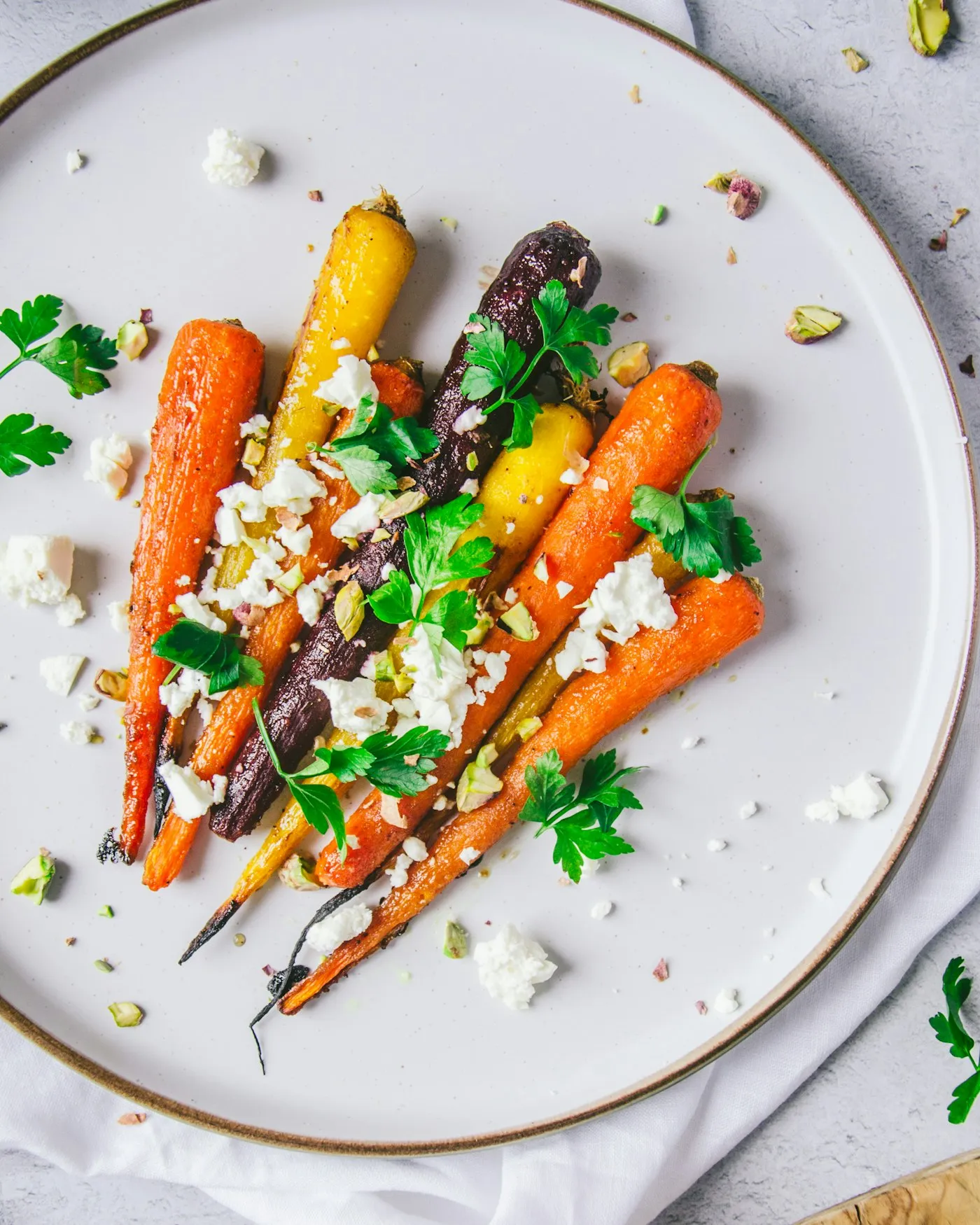
This is a plate built on one idea, which is that hot food on cold food is more interesting than either on its own. The carrots come out of a 220C oven and go straight onto yogurt that has been in the fridge, and for the first two minutes on the table there is a genuine temperature gradient in every mouthful.
It is a trick borrowed from a hundred Levantine and Turkish dishes, and it works with almost any roasted vegetable. Carrots are the version I make most because they are always in the house and because they concentrate so obligingly.
Sweetness by subtraction
A carrot is around nine per cent sugar and a great deal of water. Roasted hard, the water leaves and the sugar stays, so what tasted mild raw tastes almost candied after half an hour. Push it further than feels safe: proper black at the tips is where the flavour is, and pale roast carrots are the most common way this goes wrong.
Halving thick carrots lengthways is not about cooking time. It is about creating a flat face that can sit against hot metal.
Honey at the end
Sugar added at the start of a 220C roast is burnt sugar by minute fifteen, and burnt sugar is bitter rather than sweet. A teaspoon tossed through in the last ten minutes glazes rather than scorches.
The garlic has to be a paste
Grated on a microplane and worked with salt until it is genuinely a paste, not chopped. Raw garlic in visible pieces in cold yogurt is harsh and keeps getting harsher; dispersed as a paste it is savoury and even.
Dukkah, and why it should stay coarse
The point of dukkah is that it crunches. Blitzing it in a processor releases oil from the hazelnuts and you end up with something closer to a wet crumb. Chop by hand, keep it uneven, and add it at the last second so it stays dry on top of the yogurt.
Ingredients
For the carrots
For the yogurt
For the dukkah
Method
5 steps
Get the tray hot first
Heat the oven to 220C with an empty tray inside it. Toss the carrots with the oil, cumin, and salt while it heats.
One layer, cut side down
Tip the carrots onto the hot tray in a single layer with the cut faces down and roast for 25 minutes without turning. Then toss with the honey and give them another 8 to 10 minutes.
Toast the dukkah dry
While they roast, toast the sesame and crushed seeds in a dry pan for two minutes until they smell of themselves, then stir through the hazelnuts and salt. It should be crumbly, never a paste.
Yogurt on the plate, cold
Whisk the yogurt with the garlic paste and lemon and spread it across a wide plate in a thick layer. It must come straight from the fridge.
Hot onto cold
Pile the carrots on top while they are still too hot to handle, scatter the dukkah and herbs, and take it to the table immediately. The yogurt should be melting at the edges and still cold underneath.
Cook's notes
- Preheating the tray means the carrots start browning on contact rather than sweating for the first five minutes. It is worth the two minutes it costs.
- Honey goes in at the end. From the start it burns and turns bitter well before the carrots are tender.
- Dukkah keeps for a month in a jar. Make four times as much as you need.
- Keeps
- The carrots keep two days; assemble only to serve. Cold carrots on cold yogurt is a different and much duller dish.